

5 Systems for having “That Girls” Trip
After hearing one too many girls’ trip disaster stories, the kind that start with one friend fronting the costs and end with everyone else getting stranded, the perpetual planner in me started wondering if there was a science to traveling well with friends. Were some groups just blessed with good travel chemistry, or were there systems that could prevent girls’ trip Armageddon?
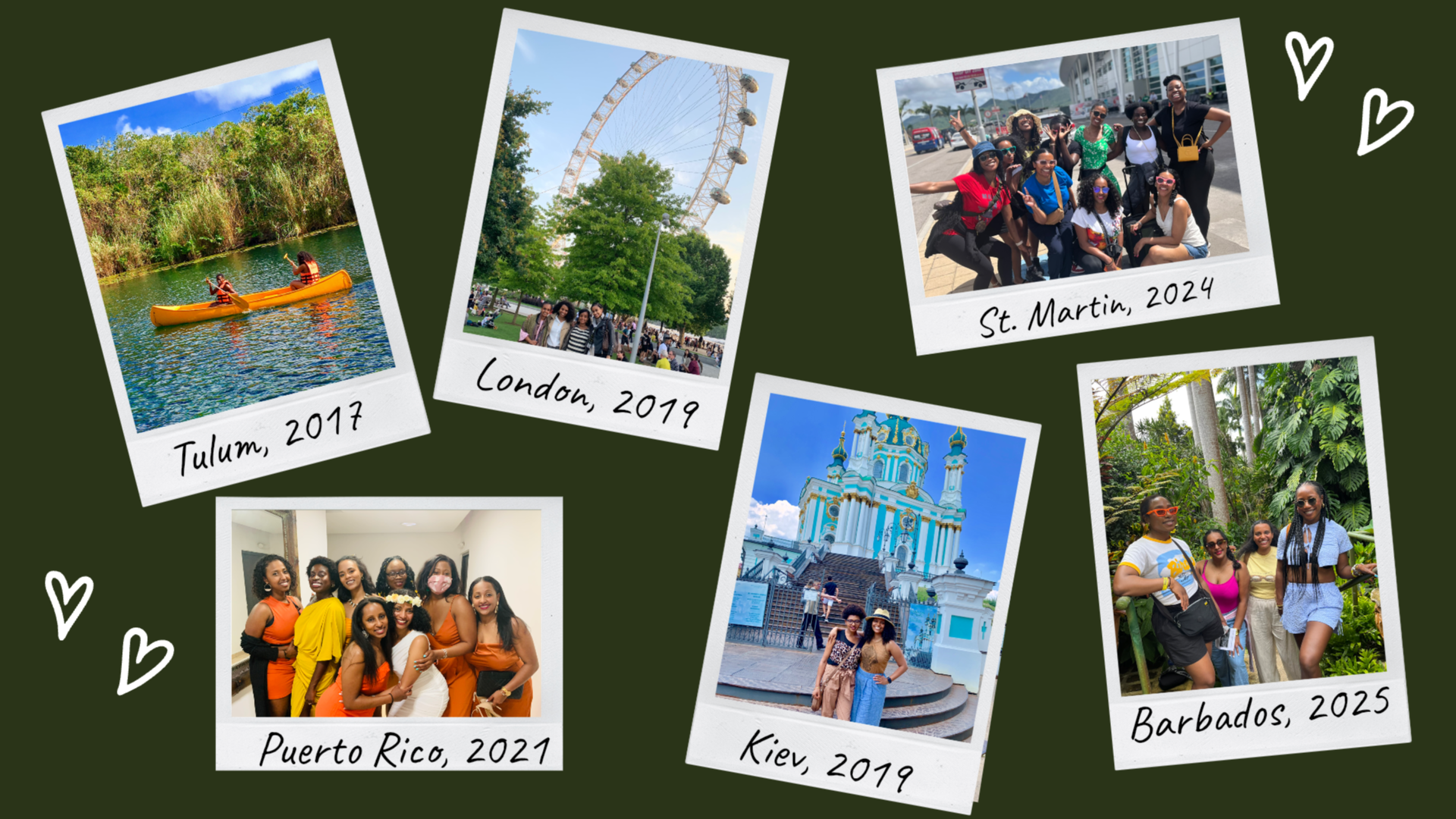
Girls trips in the last decade
Over the years, I’ve planned several girls’ trips that didn’t implode. Trips with two or fifteen girls we still talk about, not because they were perfect, but because they deepened our connection, gave us lifelong memories, and made us feel loved, understood, and empowered. And yes,there are studies showing that spending time with good friends releases happy hormones, predicts better health, extends your lifespan and may even ward off dementia, so it’s not a question of if you should have that girl's trip but how.
This year I’m taking a break from planning one, because life is lifing, but when I found out that last Tuesday January 27 was National Plan for Vacation Day, and saw a girl going viral for a girls trip gone bad, I knew I had to do a deep dive on this.
Skip to the end for the TL;DR!
1. Travel With People You Trust
This is the foundation of every successful group trip. You can plan around budgets and schedules, but you cannot plan around a lack of trust.
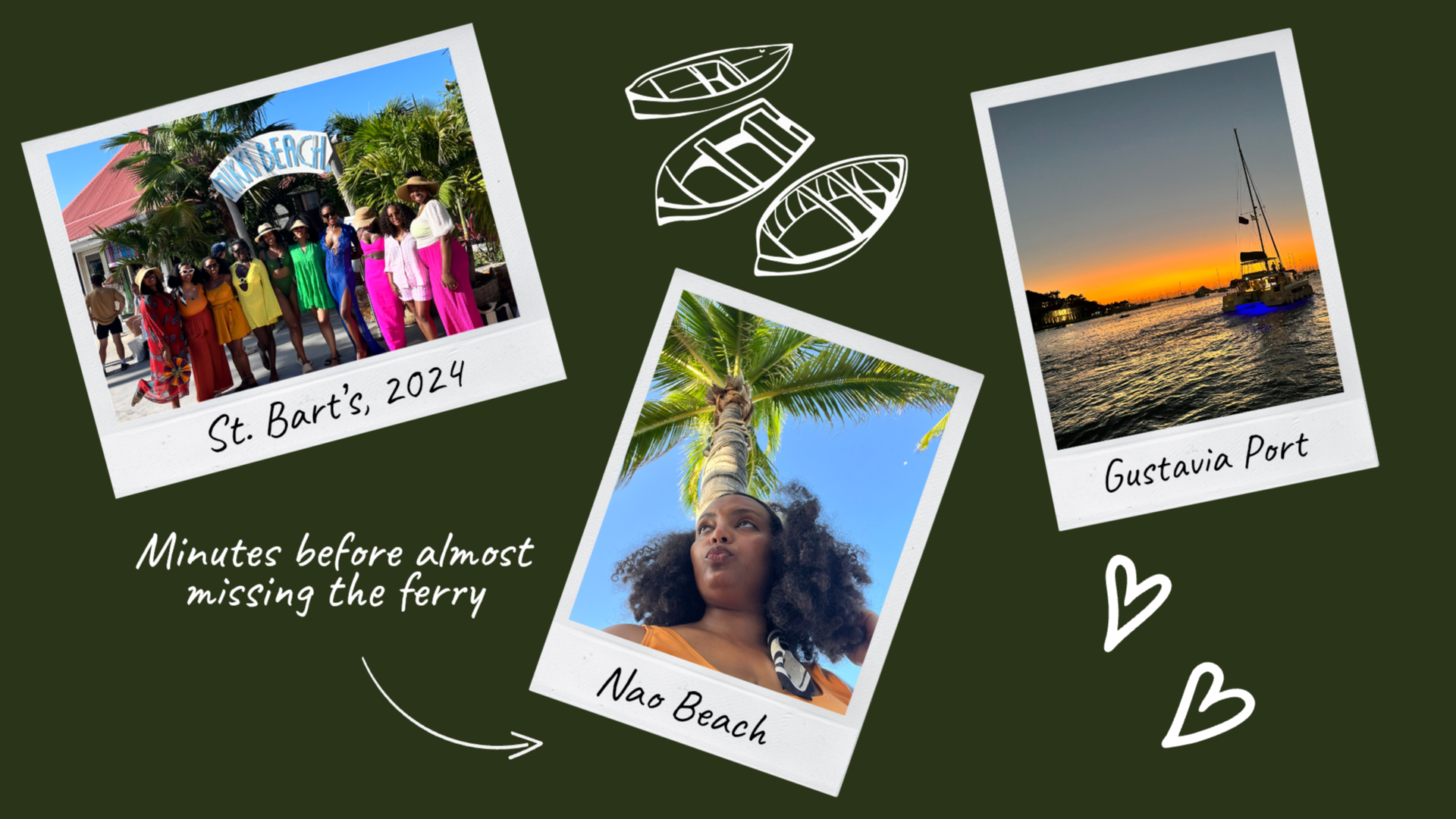
Almost stranded in St. Barths
Two years ago our group almost got stuck on St. Barths because we couldn’t get a car back to the ferry. As an eldest daughter, Capricorn, and self-proclaimed “Type A-” , I cannot tell you how much I hated that, but I remember my anxiety dying down just looking at my friends. Yes, it was a bad situation with a potentially disastrous domino effect, but if I was going to be stuck on a bougie expensive island, with mildly rude French people, there wasn’t a better group to be stuck with.
Before committing to a girls trip, ask yourself a simple question: Would I trust this group in a high-stress situation? Missed ferries, unexpected expenses, messy shared bathrooms, unforeseen stomach bugs it’s all par for the course and you don’t want to add vigilance or second guessing people’s intentions to that list. If for whatever reason you’re traveling with a new group of people you don’t know well, try to have at least one trusted friend there.
On a sidenote, if you ever go to St. Barths make sure to befriend a driver.
2. Split the Financial Responsibility Early
Money is where most girls' trips fall apart.
If you’re the friend with the big credit card limit or strong planning instincts, it can be tempting to front costs just to keep things moving. But bearing the financial burden alone can quickly turn into quiet (or not so quiet) resentment.
Instead, split responsibilities and expenses. One person books accommodations. Someone else handles activities. Another manages restaurant reservations. Everyone shares costs, deadlines, and settles up before the beginning of the trip. A color coded excel spreadsheet for splitting costs also never hurt anybody.
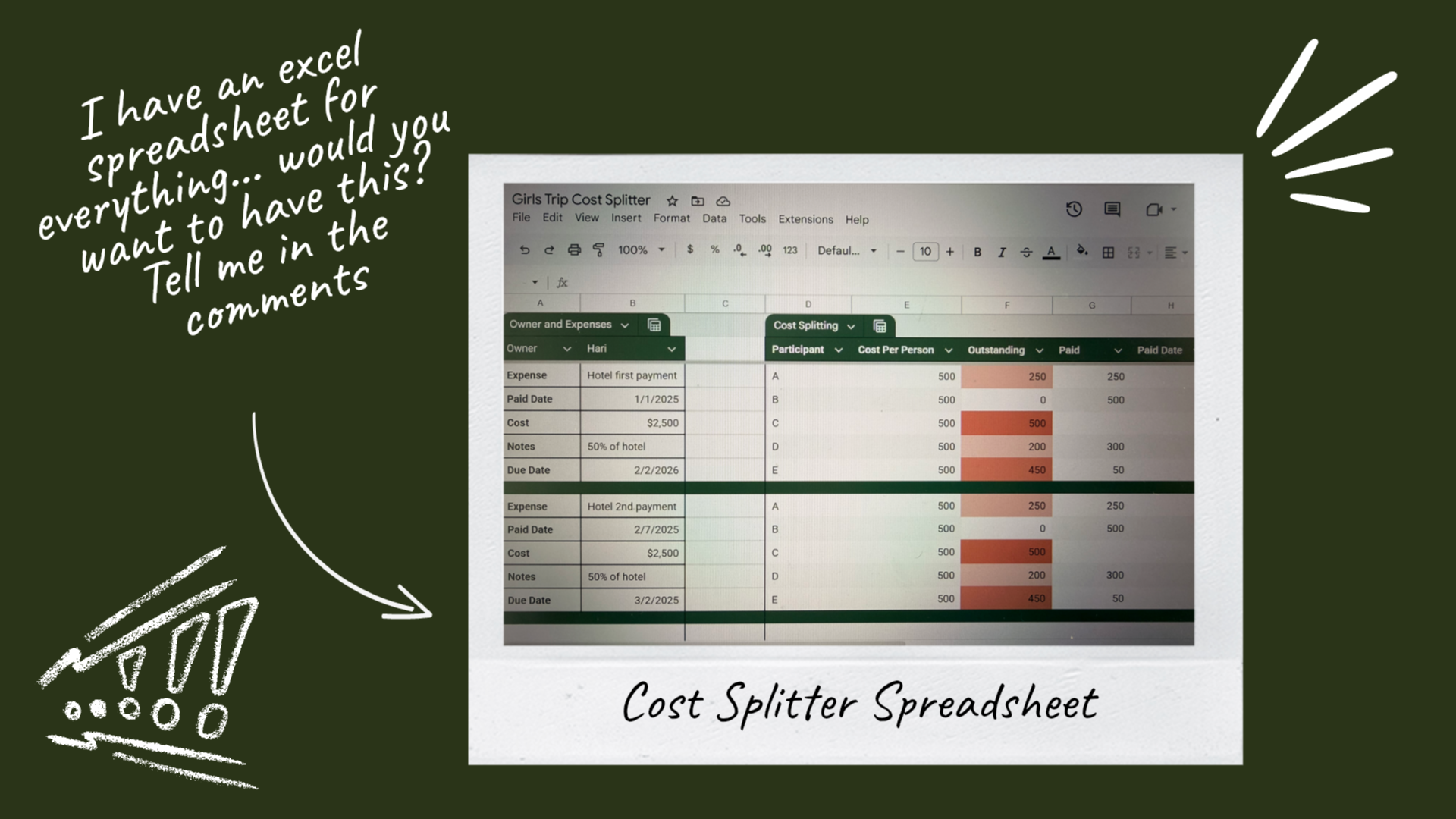
Who wouldn’t want to color code outstanding balances?
If you’re more budget-conscious than the group, speak up early. Aligning on price ranges before booking anything avoids uncomfortable conversations later. Tools like ChatGPT can help narrow destinations and costs quickly. Follow on Instagram @oooasistravel or let me know in the comments if you want some helpful AI prompts for cost effective travel planning.
3. Assign a Planning Captain and Co-Captain
Just like equal financial splits, equal planning may sound good in theory—but in reality, it rarely works.
Every group has different communication styles, approaches to project management, and tolerance for ambiguity. Designating your resident Type A friends as planning captain and co-captain will streamline information in the form of shared documents and tailored assignments!
The goal isn’t control (necessarily)... it’s clarity for everybody. One shared itinerary in Google docs can help manage expectations and avoid massive misunderstandings.

An island surprise birthday party
If you couldn’t tell in our group I’m usually planning captain. Having a co-captain not only reduces the pressure on top of daily responsibilities, but it also makes the process more fun! Like planning a surprise birthday in St. Martin with someone else taking on the creative direction? Yes please! I can coordinate payments and delivery any day, but coming up with a pastel lavender under-the-sea-themed cake? Probably not.
4. Build Unstructured Time Into the Itinerary
Overplanning is one of the fastest ways to create tension. If every hour is scheduled, small inconveniences feel bigger than they need to be.
As a first-gen Ethiopian American, maximizing ROI is in my DNA. Listen, if I’m going to spend my hard earned money I want to visit every sight, eat every food, do every activity, YOLOOOO, but apparently not everyone likes to travel like that…sigh.
So now I stick to this group trip rule: Organize one activity in the morning and one in the afternoon or evening, and keep at least 30% of your time free and unstructured.
This gives everyone an opportunity for their personal side quest: early morning hikes, canoeing by the cenotes, shopping sprees, spa days, quiet breakfast in the neighborhood cafe.
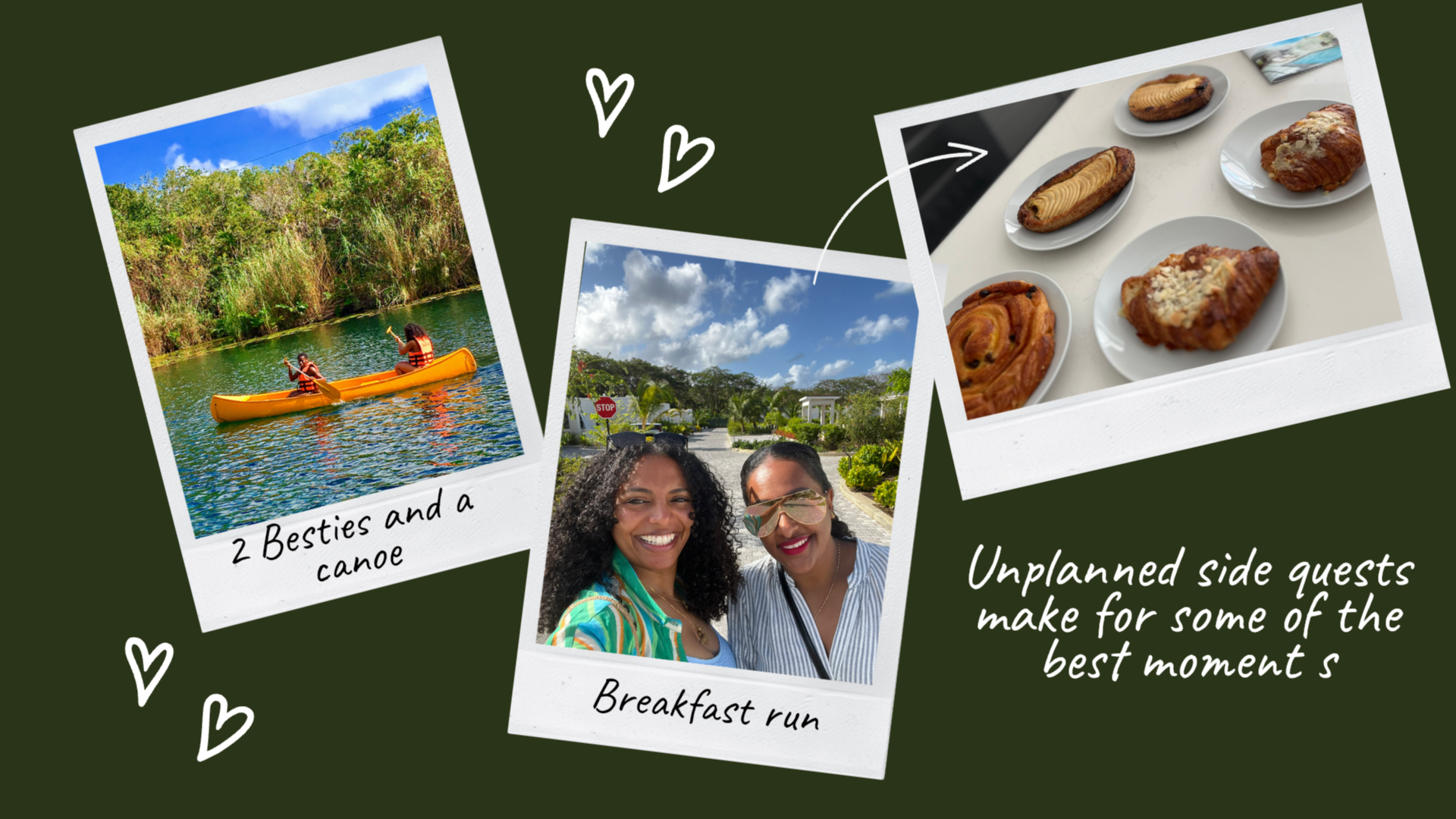
The best bonding happens on an unplanned side quest
5. Let Everyone Have Their Autonomy
Even with unstructured time, not everyone will want to do everything and that’s okay.
Yes, it’s a girls trip and you want to do things together, but forcing group activities can be the fastest way to create conflict. So let people know early on there’s no pressure to do everything, and use tools like whatsapp polls to vote on the most popular activities.
Set this expectation before the trip begins so no one feels pressure to perform or explain themselves.
TL;DR: Systems for having “That Girls” Trip
Travel with people you trust or have at least one trusted friend on the trip
Split financial responsibility and settle up before the trip starts
Assign a planning captain and co-captain to create a shared itinerary Google document
Keep at least 30% of your time free and unstructured
Respect autonomy and don’t force group activities