

How to Maximize Your PTO in 2026 and 6 Out-of-Office Tips that will make your boss and your team love you
I love being out of office. So much so that I named my side hustle after it.
And it turns out 2026 is a great year for PTO. Most U.S. federal holidays fall on Mondays or Fridays, which means—with just a few strategic days off—long weekends can easily turn into week-long vacations. According to Condé Nast Traveler, you can turn 15 PTO days into 45 days off next year, and below is my take on exactly how to do it.
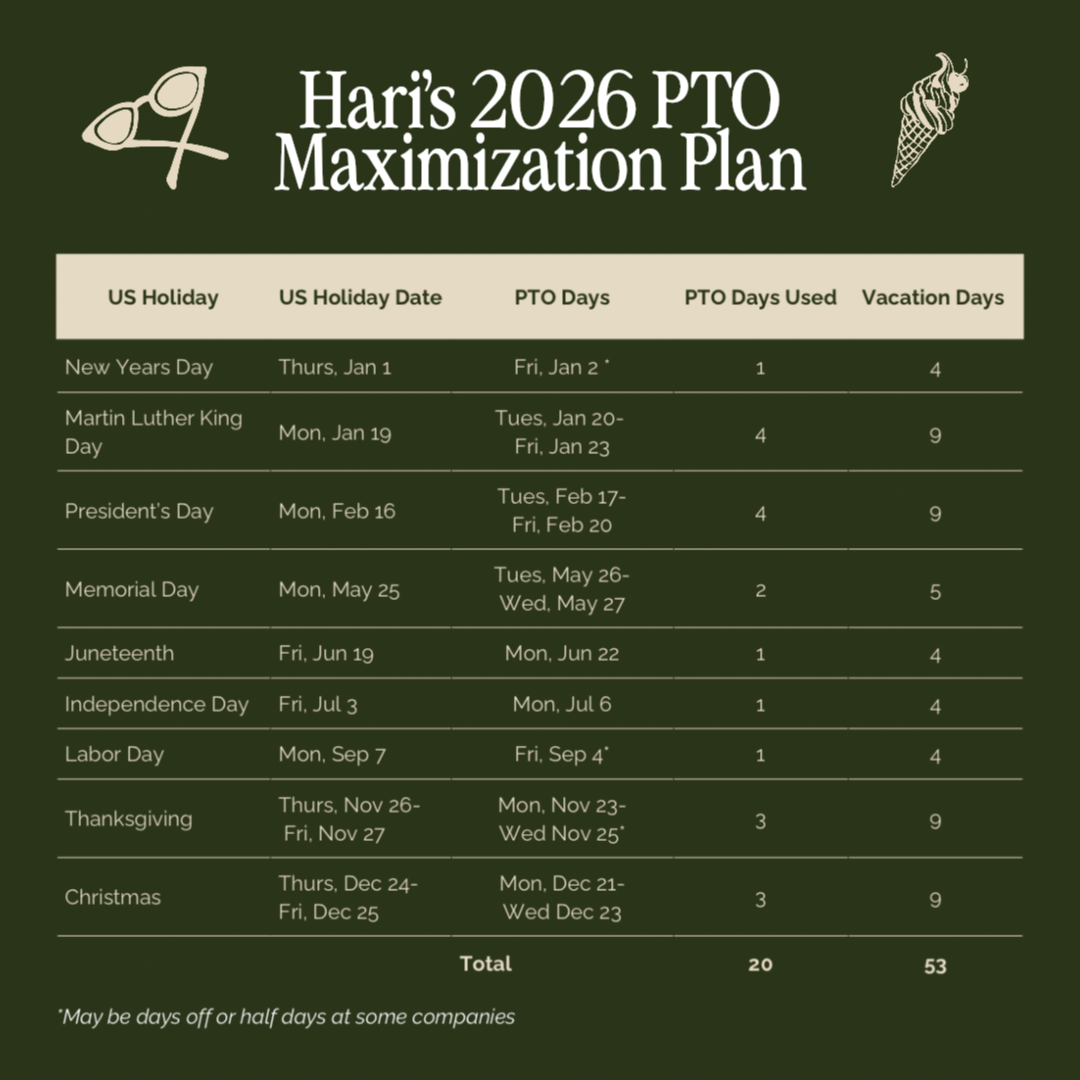
But as you prepare to maximize your vacation days, remember: how you take time off matters just as much as how much time you take. Done well, PTO can make you beloved by your boss and your team. Done poorly, it can quietly hurt your reputation.
Eleven years ago, I quit my Yale PhD, moved to NYC, and began again as a 27-year-old intern. Starting over humbled me and taught me two lessons: 1) getting ahead quickly requires ruthless organization and efficiency, and 2) real progress only happens when you know when to step away and rest.
Eight years, three companies, and several bosses later, I became a VP, managed over a dozen people, helped more than half of them get promoted, and tripled my salary. Across roles, companies, and teams, I’ve always maxed out my vacations. Having a clear system for how I go OOO has served me well—and, dare I say, even got me promoted.
So as 2025 comes to an end and you start plotting your PTO for next year, here are six things to do before you’re OOO that will help you enjoy uninterrupted vacations and make your team and boss love working with you.

1. Overcommunicate
Give your manager a heads-up. Instead of just submitting PTO in the system, send a quick message flagging your dates. Proactively check whether your time off conflicts with any major deadlines or deliverables.
If there is a conflict, come prepared with a rough coverage plan. This shows you’re thoughtful, collaborative, and aware that not everything happens in a vacuum. It also gives your manager space to flag things you may not yet be privy to.
2. Block Your Calendar (Thoughtfully)
Use the “Out of Office” calendar hold in Outlook—but please don’t add the entire team and block their calendars. I can’t tell you how many times someone’s vacation has wiped out my schedule.
Instead, add a free calendar hold on key stakeholders’ calendars titled: Your Name OOO Dates (e.g., Hari OOO Dec 29–Jan 2). Pro tip: use letters for the months instead of numbers to avoid confusing any global team members.
I also set a reminder 48 hours before my OOO begins. This ensures everyone has timely notice and prevents last-minute surprises or “Oh wait—you’re out?!” moments.
3. Clear Your Calendar
Review all meetings scheduled during your time off. Cancel or reschedule what you can, and flag meetings that require coverage—you’ll want to note these in your handover document.
I personally love taking the day after I return off as well, so I can unpack, recover from jet lag, and reset. When that’s not possible, at least try to clear your calendar on your first day back. It makes re-entry smoother and gives you a buffer in case of travel delays.
4. Create a Handover Document
We joke that PTO means Prepare The Others—but it’s true, and it’s your responsibility.
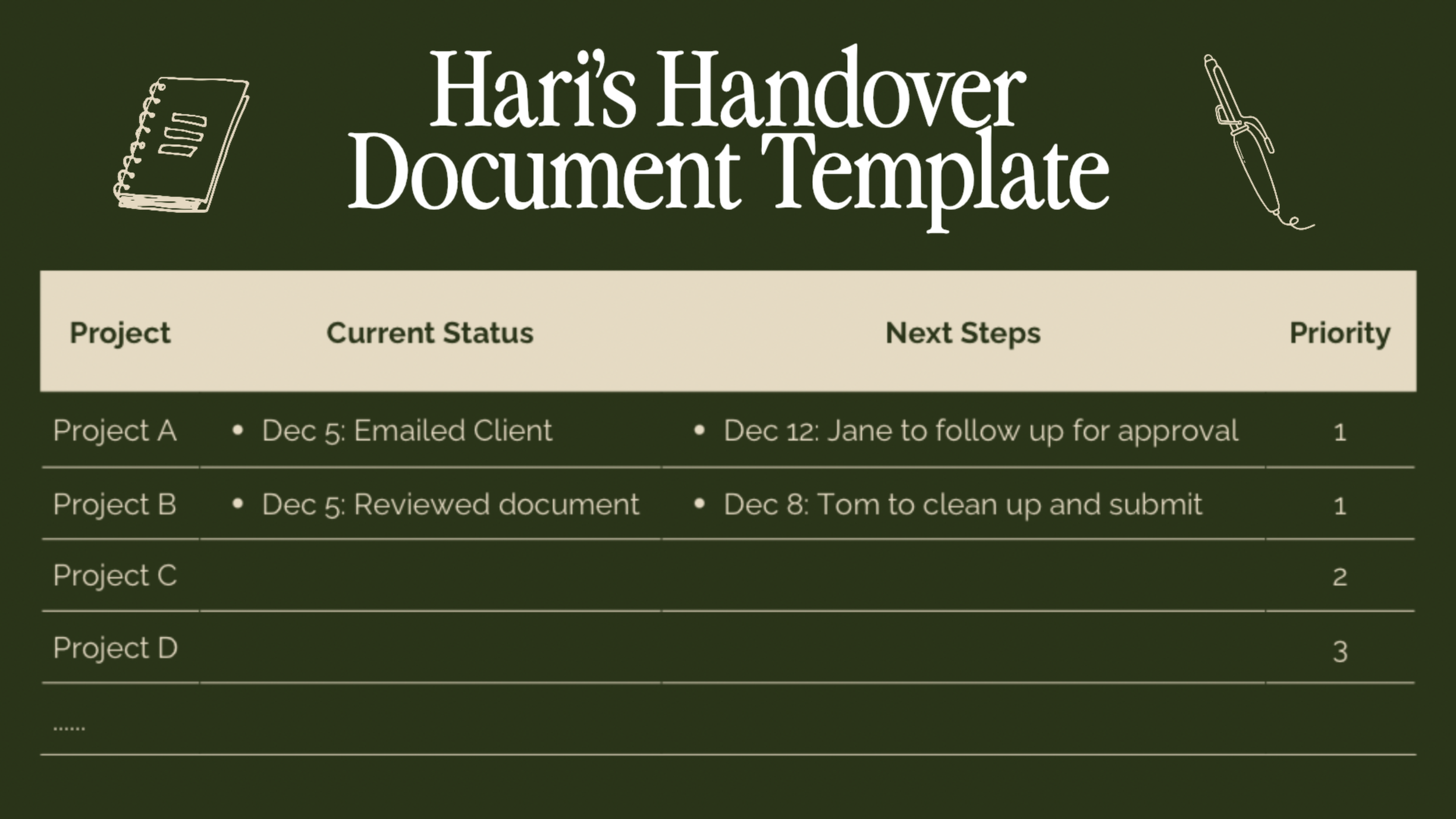
A simple handover document can save everyone (including you) unnecessary stress. A basic table works well:
Project
Current status
Next steps
Owner while you’re out
Clearly call out who owns what, and schedule a quick handover meeting if needed. If you’re extra type-A (like me), put the table in excel and add a priority column (1–3) so your team knows what must be handled versus what can wait. Adding dates for the next steps also helps the team understand any deadlines.
This one step alone can mean the difference between a peaceful vacation and constant “quick questions.”
5. Schedule a Pre-Vacation Check-In With Your Manager
The best people I’ve ever managed always did this. Use this meeting to confirm priorities and expectations. Often, your manager will flag something they won’t be able to get to—or something they want handled before you leave—and you can make a plan together.
These check-ins signal that you’re organized, proactive, and forward-thinking. They also prevent last-minute confusion and quiet resentment.
6. Set a Proper Automatic Out-of-Office Note
Yes, this deserves real thought. A strong OOO message clearly states:
The dates you’re out
The date you’re returning
Who to contact in your absence
Whenever possible, list specific teammates’ email addresses rather than your personal phone number. Your vacation should not come with an expectation of instant access.
Taking time off isn’t just about rest—it’s about how you show up professionally. The people who plan their PTO well are often the same people who are seen as reliable, organized, and ready for more responsibility.
When you overcommunicate, prepare your team, and set clear boundaries, you’re not just protecting your vacation—you’re protecting your reputation. You’re showing that you can step away without things falling apart, which is a quiet but powerful leadership skill.
So as you plan your getaways this year, remember: being great at going OOO is part of being great at your job. And when done right, your time away won’t just recharge you—it’ll reinforce why you’re valued when you return.
For more real-time content like this follow oooasistravel and the.hari.andar on instagram.